At your service in Tuscaloosa
Concrete Contractor Cottondale AL in Tuscaloosa
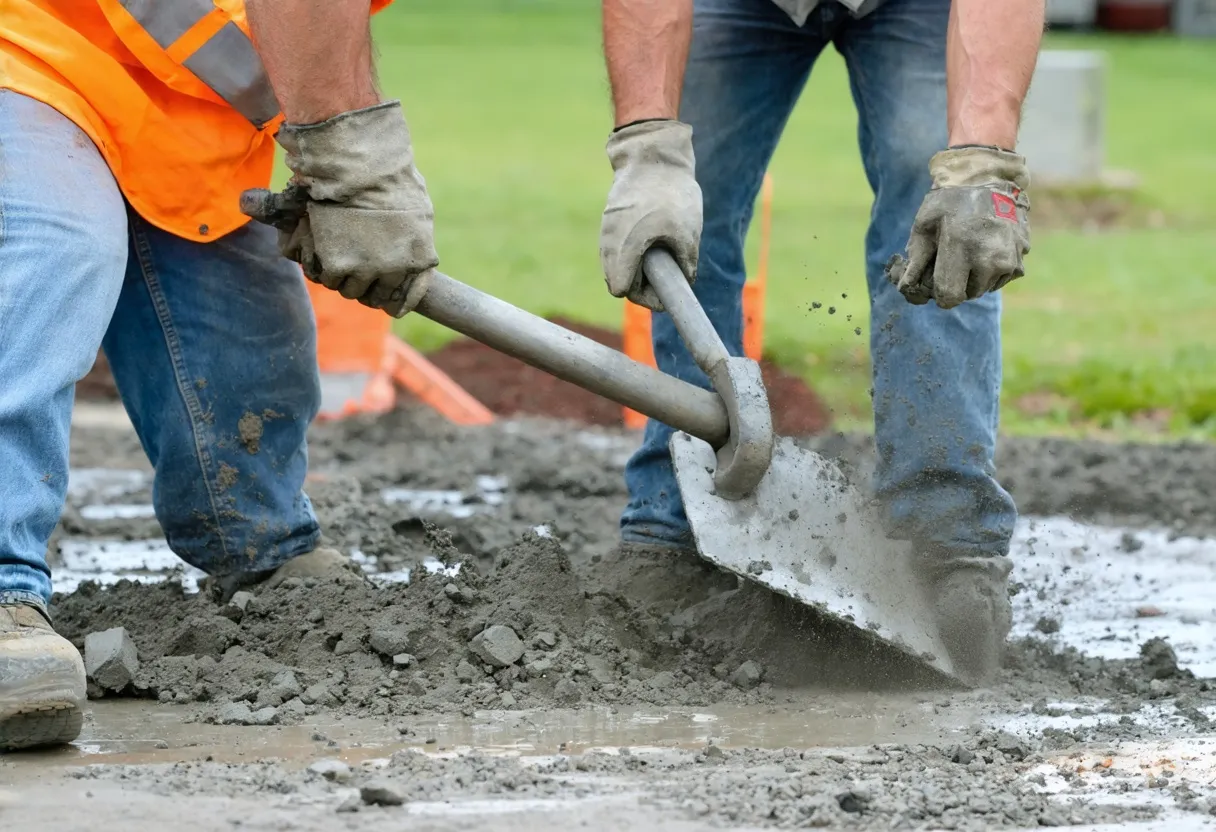
If you've searched "concrete contractor Cottondale AL" and landed on page after page of vague pricing-factor lists and generic directory copy, you already know the problem: everyone tells you concrete costs "depend on many factors," and nobody tells you anything useful about the ground you're actually building on. We do things differently. We're a concrete company built specifically around Tuscaloosa-area conditions — clay-heavy soil that moves with the seasons and roughly 55 inches of rain a year that has to go somewhere. Every slab, driveway, patio, and foundation we pour in Cottondale is engineered with that soil and that rainfall in mind, and every job leaves your hands with a written warranty, not a verbal promise.
This page covers what we do, how we do it, what actually drives your price up or down, and how to tell a contractor worth hiring from one that's just good at running ads. Read it in full before you call anyone — it'll save you from at least three expensive mistakes.
Why Clay Soil Changes Everything About Concrete Work in Cottondale
Most concrete contractors treat soil prep as a formality — scrape, grade, pour. That approach works fine in sandy or well-drained soil. It does not work reliably in the clay-heavy soil common around Cottondale and the broader Tuscaloosa area. Clay soil expands when it absorbs water and contracts as it dries out, and with roughly 55 inches of annual rainfall cycling through wet and dry stretches, that expansion-contraction cycle repeats constantly underneath your slab. (F6)
Left unaddressed, that movement is the single biggest cause of the problems homeowners call us about: driveways that heave and crack within a few years, patios that develop a lip where one section settles lower than its neighbor, and foundation slabs that crack along stress lines that have nothing to do with poor concrete and everything to do with what's underneath it. A contractor who doesn't adjust base preparation, compaction, control joint spacing, and drainage planning for clay soil is setting your project up to fail on a predictable timeline — usually somewhere between year two and year five, right after the standard one-year workmanship warranty (if they even offered one) has expired.
Our approach starts from the soil up. We over-excavate and replace unstable clay in the load-bearing zone where it matters, compact the base in lifts rather than all at once, and grade every project — driveways, patios, walkways, foundations — with positive drainage away from the structure so water isn't sitting against the slab edge during the next heavy rain. This is the difference between concrete that lasts fifteen-plus years and concrete that needs repair work before the loan on your house is halfway paid off.
What We Cover: Residential and Commercial Concrete Services
We work on both sides of the fence, and the two categories require genuinely different approaches, not just different invoices.
Residential Concrete Work
For homeowners in Cottondale, our residential work includes:
- Driveways — new pours, replacements, and extensions
- Patios, including stamped and decorative finishes
- Sidewalks and walkways
- Concrete foundation work for additions, garages, and outbuildings
- Pool decks and pool surrounds
- Steps, porches, and stoops
- Garage floors and slabs
- Retaining walls and masonry accent work
Residential jobs are typically scheduled around a single household, which gives us more flexibility on pour timing and curing schedules — useful in a climate where summer heat and afternoon storms both affect cure quality.
Commercial Concrete Work
Commercial projects carry different load requirements, different timelines, and usually a business that can't afford unplanned downtime. Our commercial scope includes:
- Parking lots and parking pads
- Commercial building foundations and slabs
- Loading docks and dumpster pads rated for repeated heavy loads
- ADA-compliant ramps and walkways
- Warehouse and light-industrial floor slabs
- Site concrete for new commercial construction
Commercial concrete generally needs a higher-strength mix design, thicker slab specifications, and reinforcement (rebar or wire mesh, sometimes both) sized to the actual traffic load — a dumpster truck backing over a pad daily puts far more stress on concrete than a passenger vehicle in a driveway. We spec commercial jobs based on actual use, not a one-size-fits-all pour, and we coordinate around your operating hours where possible so a resurfacing or repair project doesn't shut your business down for a week.
Our Process: From First Call to Finished Slab
Concrete is unforgiving — once it's poured and set, mistakes are expensive to undo. That's why our process is built to catch problems before the truck ever shows up.
1. Consultation and Site Walk
We start with an on-site visit, not a phone estimate. A phone quote for concrete work is a guess; the only way to price a job accurately is to see the site, check the slope, look at existing drainage patterns, and identify soil conditions. During this visit we'll discuss what you're trying to accomplish, walk the area, and flag anything that could affect scope — tree roots near a driveway, an existing slab that's settled unevenly, standing water after rain, or utility lines that need marking.
2. Design and Written Proposal
Next we put together a written proposal that spells out scope, materials, thickness, reinforcement, joint layout, drainage plan, timeline, and price — not a vague range, an actual number based on the actual site. This is also where we walk you through the warranty terms in writing, so you know exactly what's covered before you sign anything.
3. Site Prep and Excavation
This is the step most contractors rush and where clay-soil problems get built in permanently if it's skipped. We excavate to the proper depth, remove unstable or organic material, and bring in and compact a proper gravel base. For driveways and foundations especially, base compaction is what prevents future settling — it's invisible once the concrete is down, which is exactly why it's the step worth asking your contractor about directly.
4. Forming and Reinforcement
We set forms to the exact dimensions and grade specified in your proposal, and place reinforcement — rebar, wire mesh, or fiber-reinforced mix, depending on the application — sized to the load the slab needs to carry.
5. The Pour
We schedule pours around weather, not just our calendar. Concrete cures through a chemical reaction, not simple drying, and both extreme heat and heavy rain during the pour and early cure window can compromise the finished surface. In a market with roughly 55 inches of annual rainfall, timing the pour around the forecast isn't optional — it's part of doing the job right. (F6)
6. Finishing
Depending on the project, finishing might mean a broom finish for slip resistance on a driveway, a smooth trowel finish for a garage floor, or a stamped and colored finish for a decorative patio. Control joints are cut at this stage in a pattern designed to direct inevitable shrinkage cracking into joint lines instead of random cracks across the visible surface.
7. Curing and Final Walkthrough
We protect the fresh concrete during the critical curing period and do a final walkthrough with you once it's ready for use, covering care instructions and answering any questions about the finished work.
Concrete Repair Solutions
Not every project is a new pour. A large share of the calls we get from Cottondale homeowners and businesses are about existing concrete that's cracked, settled, spalled, or just looks bad — and repair is often the right call instead of a full replacement.
Common repair scenarios we handle:
- Crack repair — routing and sealing active cracks to stop water intrusion and prevent them from widening
- Slab leveling and mudjacking — raising a settled section of driveway, patio, or walkway back to grade rather than replacing the whole slab
- Spalling and surface repair — resurfacing concrete where the top layer has flaked or pitted, often from de-icing products, poor original finishing, or age
- Joint and expansion joint repair — replacing failed joint sealant that's letting water get underneath the slab
- Foundation crack repair — addressing structural cracks in foundation walls or slabs, including assessing whether a crack is cosmetic or a sign of ongoing settlement
- Driveway and sidewalk trip-hazard correction — leveling panels that have become uneven and create a fall risk
The right repair depends on what's actually causing the damage. A crack from normal shrinkage during curing is cosmetic and easy to seal. A crack that's widening, has a vertical offset, or keeps reappearing after patching is usually a symptom of soil movement or drainage failure underneath — patching the surface without fixing the underlying cause just means you'll be calling someone again in two years. We diagnose the cause before we quote the fix.
Retaining Walls and Masonry
Retaining walls do double duty on clay-heavy, sloped, or poorly-drained lots: they hold back soil and they manage where water goes. A poorly built retaining wall on clay soil is a common failure point — without proper drainage behind the wall, hydrostatic pressure from waterlogged clay builds up and pushes the wall out of alignment or cracks it outright.
Our retaining wall and masonry work includes:
- Segmental block and poured concrete retaining walls
- Proper drainage systems built into the wall (gravel backfill and drain tile, not just a wall with dirt piled behind it)
- Masonry accent walls, seat walls, and planters
- Steps and masonry work integrated with patios and walkways
- Repair of existing walls that are leaning, bowing, or separating at the joints
Because we already engineer our flatwork around clay soil movement, the same drainage-first thinking carries over to wall construction — the wall's job isn't finished until the water behind it has somewhere to go.
Concrete Patios vs. Wood Decks
If you're deciding between a concrete patio and a wood deck, the honest answer is that it depends on what you want to be doing five and ten years from now — but the maintenance gap is real and worth understanding upfront.
Maintenance
A wood deck in a humid, high-rainfall climate needs regular upkeep: pressure washing, re-staining or sealing every one to three years, and ongoing inspection for rot, warping, and insect damage — termites and moisture go hand in hand in the Southeast. A concrete patio needs occasional sealing (roughly every two to three years for a sealed finish) and cleaning, but there's no wood to rot, no boards to replace, and no annual staining cycle.
Lifespan
A well-built concrete patio, properly based and finished, commonly lasts 25-30+ years with basic maintenance. A wood deck, even well-maintained, typically needs significant repair or full replacement of decking boards within 15-20 years, sooner if maintenance lapses.
Upfront Cost vs. Long-Term Cost
Wood decks are often cheaper to install initially, especially for elevated structures. Concrete patios usually cost more upfront but less over the life of the structure once you factor in the recurring cost of stain, sealant, and board replacement on a deck. For a ground-level patio space, concrete typically wins on total cost of ownership.
Design Flexibility
Modern concrete isn't limited to plain gray slabs — stamped patterns, exposed aggregate, and color options give concrete patios a range of looks that can mimic stone, brick, or tile at a lower cost than the real material. Wood offers a natural warmth that some homeowners prefer aesthetically, particularly for elevated decks where concrete isn't a practical option anyway.
For ground-level outdoor living space in this climate, we generally recommend concrete for lower long-term maintenance. For elevated structures off a second story or a sloped backyard, wood or composite decking is often the more practical choice — and we'll tell you that directly even though it's not our scope of work.
Durability and Longevity: What Determines How Long Your Concrete Lasts
"How long will this last" is the most important question a lot of homeowners forget to ask. The honest answer: it depends far more on what's under the concrete than what's in it.
Factors that determine longevity:
- Base preparation and compaction — the single biggest factor in whether a slab stays level over time
- Soil conditions — clay soil that isn't properly managed during prep will move the slab above it regardless of concrete quality
- Drainage — water that pools against or under a slab accelerates cracking and, in freeze-thaw conditions, spalling
- Mix design and slab thickness — matched to the actual load the concrete will carry
- Reinforcement — rebar or mesh sized appropriately for the application
- Curing conditions — proper moisture and temperature control during the curing window
- Control joint placement — joints cut in the right pattern and depth to control where cracking happens
- Ongoing maintenance — sealing, prompt crack repair, and keeping drainage clear
Properly installed concrete, built for local soil and climate conditions, commonly lasts 25-30 years or more for residential driveways and patios, and even longer for foundations. Concrete that fails early is almost always a base-prep or drainage failure, not a "the concrete wasn't strong enough" failure — which is exactly why our process leads with soil and drainage work rather than treating it as an afterthought.
DIY vs. Professional Installation
Concrete looks simple — mix it, pour it, smooth it — and that simplicity is exactly what leads a lot of ambitious homeowners into a expensive redo. Here's where DIY genuinely works and where it doesn't.
Where DIY Can Work
Small, non-structural projects — a stepping stone path, a small decorative planter edge, patching a minor hairline crack with a store-bought filler — are reasonable DIY territory if you're comfortable with basic concrete work.
Where Professional Installation Matters
Anything load-bearing or larger in scale carries real risk if done wrong:
- Driveways — require correct base depth, compaction equipment, and slope calculations most homeowners don't have access to or experience with
- Foundations — structural work where an error isn't cosmetic, it's a safety and resale problem
- Anything on clay soil — without proper excavation and compaction equipment, a DIY pour on untreated clay soil is likely to crack and heave within a few years
- Large patios and slabs — pouring, finishing, and cutting control joints on a large area within concrete's working window is difficult to manage without a crew and the right tools
- Retaining walls — a wall that fails can cause real property damage and, in some cases, injury
The math that matters: concrete is inexpensive on its own, but ordering, equipment rental, and labor add up fast, and a failed DIY pour usually costs more to demolish and redo correctly than it would have cost to hire a professional the first time. If you're on the fence, it's worth getting a quote before you rent equipment — the price gap is often smaller than people expect.
What Affects Your Concrete Project's Cost
We don't publish a generic price list, because a generic price list is exactly the kind of vague pricing-factor talk that doesn't actually help you plan. What we will do is walk you through, honestly, what moves the number up or down so you're not blindsided:
- Square footage and slab thickness — bigger and thicker means more material and more labor
- Site accessibility — a driveway a concrete truck can pull straight up to costs less to pour than a backyard patio requiring wheelbarrow relay or pump truck access
- Soil conditions and excavation depth — sites with unstable or heavily saturated clay may need deeper excavation and more base material
- Existing surface removal — demolishing and hauling away an old slab, driveway, or patio adds cost before the new work even starts
- Reinforcement type — wire mesh vs. rebar vs. fiber-reinforced mix, chosen based on load requirements
- Finish selection — a basic broom finish costs less than stamped, colored, or exposed-aggregate decorative finishes
- Drainage work required — grading, French drains, or additional drainage solutions add scope but prevent expensive problems later
- Project timeline and season — scheduling flexibility can occasionally affect pricing depending on our workload
- Permits — some municipal or county permits may be required depending on the project type and location
Every proposal we write breaks these out specifically for your site, with an actual price attached — not a range so wide it's meaningless — and backed by a written warranty on the work.
Our Service Area
We serve Cottondale and the surrounding Tuscaloosa-area communities, including Forest Lake, Alberta City, Northport, and Vance. (F1, F2, F3, F4, F5) Working across this broader area means we see how soil and drainage conditions vary block to block and town to town, which sharpens our judgment on site prep rather than diluting it — we're not applying a one-size-fits-all playbook to every job.
Licensing, Insurance, and Our Written Warranty
Before you hire any concrete contractor, ask three questions directly: are you licensed, are you insured, and will the warranty be in writing. If a contractor hesitates on any of those three, that's your answer.
We carry the licensing and insurance coverage required to do this work legally and safely, and we put our warranty terms in writing as part of every proposal — before you sign, not after you've already paid a deposit. A verbal warranty is worth exactly as much as the paper it's not written on. If a contractor won't commit their warranty to writing, assume they don't expect the concrete to hold up long enough to matter.
Request a Free Quote
No obligation, no pressure, just a clear price for your project.
Get Your Written Quote
See the price before you decide anything.