At your service in Tuscaloosa
Concrete Contractor Vance AL in Tuscaloosa
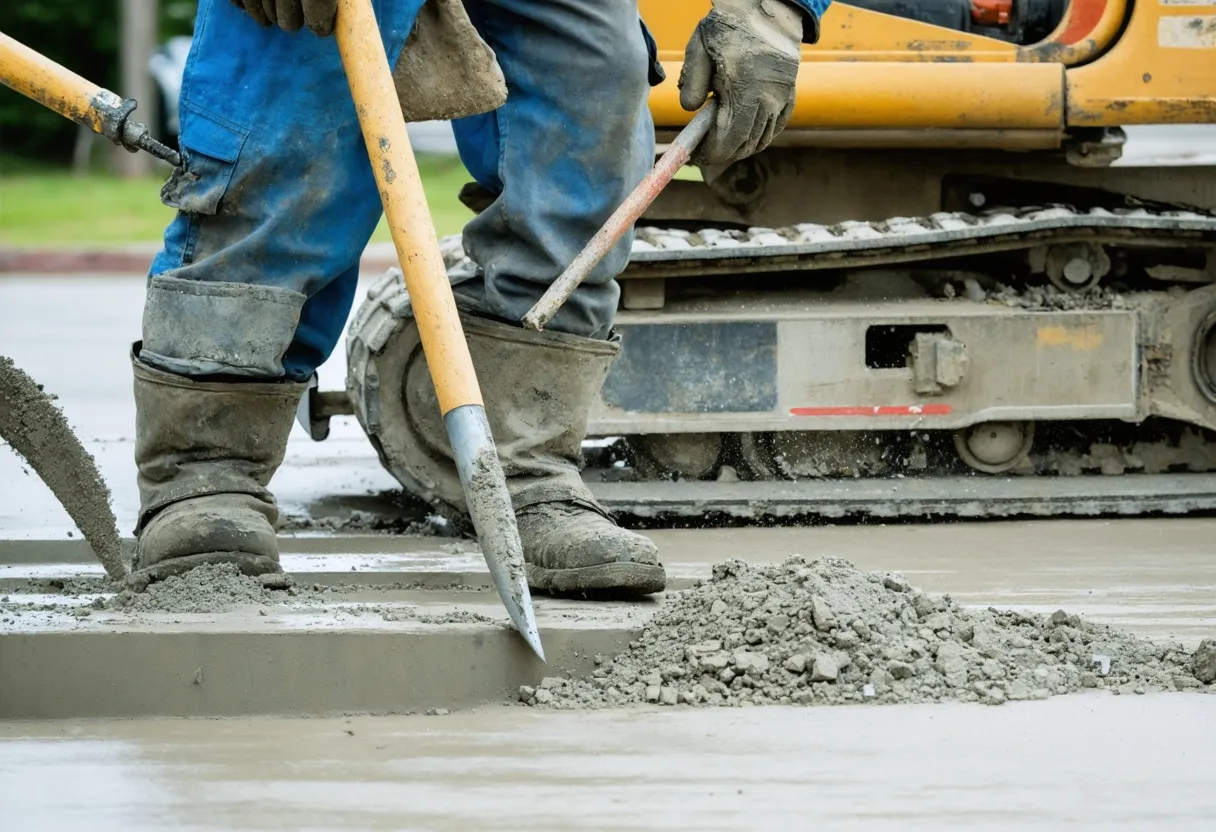
Concrete work in Vance, Alabama isn't the same job it is two counties over. Between the heavy clay soil under most Vance lots and roughly 55 inches of rain a year across the region, concrete that's poured without the right base prep, control joints, and drainage plan doesn't just look bad in a few years — it heaves, cracks, and settles unevenly. If you've searched "concrete contractor Vance AL" hoping for more than a directory listing with a phone number, this page is built to actually answer the questions you have before you sign a contract: what the work involves, how pricing gets decided, how long concrete should last here, and what separates a contractor worth hiring from one worth skipping.
We serve Vance as part of our broader Tuscaloosa-area concrete company, handling everything from driveway replacements and stamped patios to retaining walls, foundations, and commercial flatwork. What follows is a full breakdown of the process, the cost factors, the durability questions, and the vetting steps you should walk through before hiring anyone to pour concrete on your property.
Why Vance's Soil and Weather Change How Concrete Should Be Installed
Vance sits in an area where clay-heavy soil is the norm, not the exception. Clay soil expands when it's saturated and contracts hard when it dries out, and with roughly 55 inches of rainfall a year moving through the region, that expansion-contraction cycle happens constantly — not just once a season. A slab poured on unprepared clay, with no compacted gravel base and no proper drainage grading, will move with the soil underneath it. That's how you end up with a driveway that cracks along the same line every spring, or a patio corner that starts to sink two years after installation.
This is the difference between a contractor who treats concrete as a one-size-fits-all pour and one who actually accounts for local ground conditions. Proper installation in a clay-soil, high-rainfall market like this means:
- Excavating below the frost and moisture-active zone, not just skimming the topsoil
- Compacting a crushed stone base (typically 4–6 inches) to create a stable, well-draining layer under the slab
- Grading the subgrade so water sheds away from the structure instead of pooling against it
- Placing control joints at the correct spacing so cracking, when it happens, occurs in planned lines instead of random fractures
- Using a concrete mix and reinforcement (wire mesh or rebar, depending on the application) suited to the load and soil movement expected
Skip any of these steps and you're not saving money — you're deferring a repair bill. This is also why we approach driveway installation across the Tuscaloosa area the same way regardless of which town the property sits in: the soil doesn't change much from one side of the market to the other, so the prep standard shouldn't either.
Residential vs. Commercial Concrete Services
Concrete work splits into two very different categories, and the standards, timelines, and equipment involved differ accordingly.
Residential Concrete
For homeowners, the most common projects are driveways, walkways, patios, garage slabs, pool decks, and retaining walls. These jobs are usually scheduled around a homeowner's timeline, involve smaller crews, and put a premium on finish quality — a driveway is the first thing a visitor sees, so broom finishes, stamped patterns, exposed aggregate, and clean control-joint layout matter as much as the structural work underneath.
Commercial Concrete
Commercial work — parking lots, loading areas, warehouse floors, building pads, and sidewalks tied to code compliance — carries different demands. These projects typically need to meet ADA slope and access requirements, handle heavier and more frequent loads (delivery trucks, forklifts, foot traffic), and often have to be completed on a tighter schedule to avoid disrupting a business. Commercial concrete usually calls for higher-strength mix designs and more rigorous jointing and reinforcement plans than a residential driveway would need.
A contractor who only does residential work may not have the equipment or experience to pour a structurally sound commercial pad, and a commercial-focused outfit may not bring the finish-level attention a homeowner expects on a patio. Ask what percentage of a contractor's work is residential vs. commercial before assuming they're equally strong at both.
How the Process Works: From First Call to Finished Slab
A concrete project should never start with a crew showing up and pouring. Here's what a properly run process actually looks like, step by step:
1. Initial Consultation and Site Visit
This is a walk-through of the actual site, not a phone estimate. A contractor should look at existing grading, drainage patterns, soil condition, access for equipment and concrete trucks, and any obstacles (trees, utility lines, existing structures) that will affect the pour.
2. Scope and Design Discussion
This is where finish type (broom, stamped, exposed aggregate, stained), thickness, reinforcement, and layout get decided. For driveways and patios, this also covers slope for drainage and how the new concrete will tie into existing structures like a garage slab or house foundation.
3. Written Estimate
A legitimate estimate breaks out labor, materials, demolition/removal (if replacing old concrete), and any site prep separately, so you can see what you're actually paying for rather than a single lump number.
4. Demolition and Excavation (if applicable)
Removal of old concrete or existing surface, followed by excavation to the proper depth for base material.
5. Base Preparation
This is the step most likely to get shortcut by low-bid contractors, and it's the step that matters most in clay-soil conditions. Proper compaction here is what prevents settling and cracking later.
6. Forming and Reinforcement
Wood or metal forms set the shape and boundaries; wire mesh or rebar is placed based on the load the slab needs to handle.
7. Pouring and Finishing
Concrete is poured, screeded level, and finished according to the chosen texture. Control joints are cut while the concrete is still workable to guide future cracking into clean lines.
8. Curing
The concrete is kept moist and protected while it gains strength — this is a distinct phase from drying, and rushing it is one of the most common causes of surface problems.
9. Final Walkthrough
A completed project should include a walkthrough covering care instructions, expected curing timeline before full use, and warranty terms in writing.
What Actually Drives Concrete Pricing (Without Guessing at a Number)
Every legitimate estimate is different because every site is different. Rather than quoting a flat number that doesn't mean much without context, here's what actually moves the price on a concrete project:
- Square footage and thickness — a driveway rated for daily vehicle traffic needs more depth and reinforcement than a walkway, which changes both material volume and labor.
- Site access — if a concrete truck can pull right up to the pour site, labor is faster. If concrete has to be wheelbarrowed a long distance around a house or through a tight side yard, that adds hours.
- Demolition and removal — replacing an existing driveway or patio means the cost of breaking up, hauling, and disposing of old concrete before any new work starts.
- Excavation depth and soil condition — in clay-heavy ground, more excavation and a deeper compacted base are often needed to get a stable subgrade, which affects both time and base material volume.
- Finish type — a basic broom finish costs less than stamped patterns, exposed aggregate, or decorative staining, which require more labor and specialized tools.
- Reinforcement — wire mesh vs. rebar, and the spacing/grade of rebar, changes material cost and adds labor time.
- Drainage and grading work — if water management has to be engineered into the site (common in Vance's clay soil and heavy rainfall conditions) that's additional scope beyond the slab itself.
- Season and scheduling — concrete cures differently in extreme heat or cold, which can affect scheduling flexibility and sometimes requires additives or protective measures.
- Permits — some municipal projects require permitting, which adds cost and lead time.
We've broken these factors down in more detail, with real ranges by project type, on our Tuscaloosa concrete pricing guide — it's worth reading before you collect quotes so you know whether a bid is actually complete or leaving out steps that show up as change orders later.
How Long Should Concrete Actually Last?
Properly installed concrete is one of the longest-lasting materials you can put on residential or commercial property — a well-built driveway or patio can reasonably last 25 to 30+ years, and foundations and structural flatwork often outlast the buildings around them. But that lifespan is entirely dependent on installation quality, not just the concrete mix itself.
The factors that determine whether concrete hits that lifespan or fails early:
- Base preparation — the single biggest factor. Concrete poured on an uncompacted or poorly compacted base will crack and settle regardless of the mix quality above it.
- Proper curing — concrete that's allowed to cure correctly (kept moist, protected from extreme temperature swings) develops significantly more strength than concrete rushed through the process.
- Control joint placement — joints spaced and cut correctly direct natural cracking into clean, planned lines instead of random surface cracks.
- Drainage — water pooling against or under a slab is one of the most common causes of premature failure, especially relevant given regional rainfall totals.
- Sealing and maintenance — periodic sealing helps concrete resist moisture penetration, staining, and freeze-thaw stress, extending its usable life.
- Load matching — a slab designed for foot traffic that later takes vehicle weight (or a driveway that occasionally sees a heavy delivery truck) will wear faster than one designed for its actual use.
This is why the cheapest bid is rarely the best value — a slab that fails in 5 years because of skipped base prep costs more in the long run than one installed correctly the first time.
Retaining Walls and Masonry
On clay-heavy, sloped, or poorly draining lots, retaining walls aren't just landscaping — they're often the difference between stable soil and a yard that erodes or shifts toward a foundation over time. A properly engineered retaining wall manages water pressure behind it (through backfill, drainage pipe, and weep holes), uses a footing sized for the wall height and soil load, and ties into the surrounding grade so water is directed away from structures instead of toward them.
Retaining wall failures almost always trace back to one of two causes: no drainage plan behind the wall (so hydrostatic pressure builds up and eventually pushes the wall out of alignment), or a footing that wasn't sized for the soil conditions. Given how much clay soil retains water in this region, drainage design behind a retaining wall matters as much as the wall face itself. We cover wall types, block vs. poured options, and what a proper drainage system looks like in more detail on our retaining wall installation page.
Patios: Concrete vs. Wood Deck
If you're deciding between a concrete patio and a wood deck, the comparison usually comes down to maintenance, longevity, and how the structure holds up against this region's rainfall.
Maintenance
Wood decking requires regular upkeep — sealing or staining every 1–2 years, board replacement as sections rot or warp, and inspection for insect damage. In a high-rainfall climate, wood exposed to constant moisture cycles is more prone to rot, mildew, and warping without diligent maintenance. Concrete patios need periodic sealing (roughly every 2–5 years depending on the sealant and exposure) but don't require board-level repairs, staining, or insect treatment.
Longevity
A wood deck, even well-maintained, typically needs major refurbishment or replacement within 15–20 years. A properly installed concrete patio can last multiple decades with basic sealing and crack monitoring.
Upfront Cost and Design
Wood decking can sometimes be less expensive upfront depending on design complexity, and it offers a different aesthetic and elevation flexibility concrete doesn't (particularly on sloped lots or for second-story decks). Concrete, especially stamped or stained, offers more finish variety at ground level and doesn't have the fire, insect, or rot vulnerabilities wood carries.
For ground-level patios in a clay-soil, high-rainfall market, concrete is generally the lower-maintenance, longer-lifespan option — but the right choice depends on your site's elevation, drainage, and design goals.
DIY vs. Professional Installation
Small concrete projects — a stepping stone path, a small pad for a shed, minor patch work — are reasonably within reach for an experienced DIYer. But driveways, patios, retaining walls, and anything structural carry risks that go beyond "did it come out level":
- Base preparation is easy to get wrong — without the right compaction equipment and knowledge of proper depth for local soil, a DIY base often isn't stable enough to prevent cracking and settling.
- Concrete sets fast — you generally have a limited working window to place, screed, and finish a pour before it becomes unworkable. Underestimating the crew size or timing needed is one of the most common DIY failure points.
- Reinforcement calculations matter — using the wrong wire mesh or rebar spacing for the load a slab will carry can lead to structural cracking that's expensive to fix after the fact.
- Drainage and grading require planning — getting slope wrong by even a small margin can send water toward a foundation instead of away from it.
- Equipment cost — renting a mixer, compactor, and finishing tools for a one-time job can close much of the price gap between DIY and hiring a professional, once you account for your own labor time.
For small, non-structural projects, DIY can make sense. For driveways, patios, walls, and anything load-bearing, the cost of a failed DIY pour — demolition and a full professional redo — almost always exceeds what hiring it out correctly the first time would have cost.
Concrete Repair Solutions
Not every concrete problem requires replacement. Depending on the damage, there are several repair approaches:
- Crack injection and sealing — for narrow, stable cracks that aren't actively widening, epoxy or polyurethane injection can restore structural continuity and stop water intrusion.
- Mudjacking or slab lifting — for slabs that have settled or sunk in one area (common where base compaction was inadequate), lifting techniques can raise the slab back to grade without full replacement.
- Resurfacing — for concrete that's structurally sound but cosmetically worn, cracked at the surface, or discolored, a resurfacing overlay can restore appearance without demolition.
- Joint and edge repair — damaged control joints or spalled edges can often be patched rather than requiring a full slab replacement.
- Full replacement — when cracking is extensive, the base has failed structurally, or settling is severe and ongoing, replacement is the more cost-effective long-term solution over repeated patch repairs.
The right call between repair and replacement comes down to whether the underlying base and structure are still sound. A contractor should be able to explain which category your damage falls into and why — if every estimate you get recommends full replacement regardless of the damage, get a second opinion.
Multi-Town Service Area Coverage
We work across the broader Tuscaloosa concrete market, not just a single zip code, which matters because soil and drainage conditions are consistent across the area we serve. In addition to Vance, we handle residential and commercial concrete projects in Forest Lake, Alberta City, Northport, and Cottondale. Working across these areas regularly means we're applying the same base-prep and drainage standards on every job, regardless of which town the property is in — not a different standard depending on the client's address.
Licensing, Insurance, and What to Verify Before You Hire
Concrete work is a permanent installation — if something goes wrong structurally or a crew is injured on your property, the difference between a properly licensed and insured contractor and an unlicensed operator is the difference between a resolved problem and a financial liability that lands on you. Before hiring any concrete contractor in Vance or the surrounding area, verify:
- General liability insurance — protects you if property is damaged during the project.
- Workers' compensation coverage — protects you from liability if a worker is injured on your property.
- Appropriate business licensing — confirms the contractor is operating legitimately and can be held accountable.
- Written warranty terms — ask specifically what's covered (cracking, settling, finish defects), for how long, and get it in writing before work begins.
Any contractor should be able to provide proof of insurance and licensing without hesitation. If a contractor is vague about coverage, can't produce documentation, or pushes back on providing warranty terms in writing, treat that as a red flag regardless of how competitive the price looks.
Request a Free Quote
No obligation, no pressure, just a clear price for your project.
Get Your Written Quote
See the price before you decide anything.