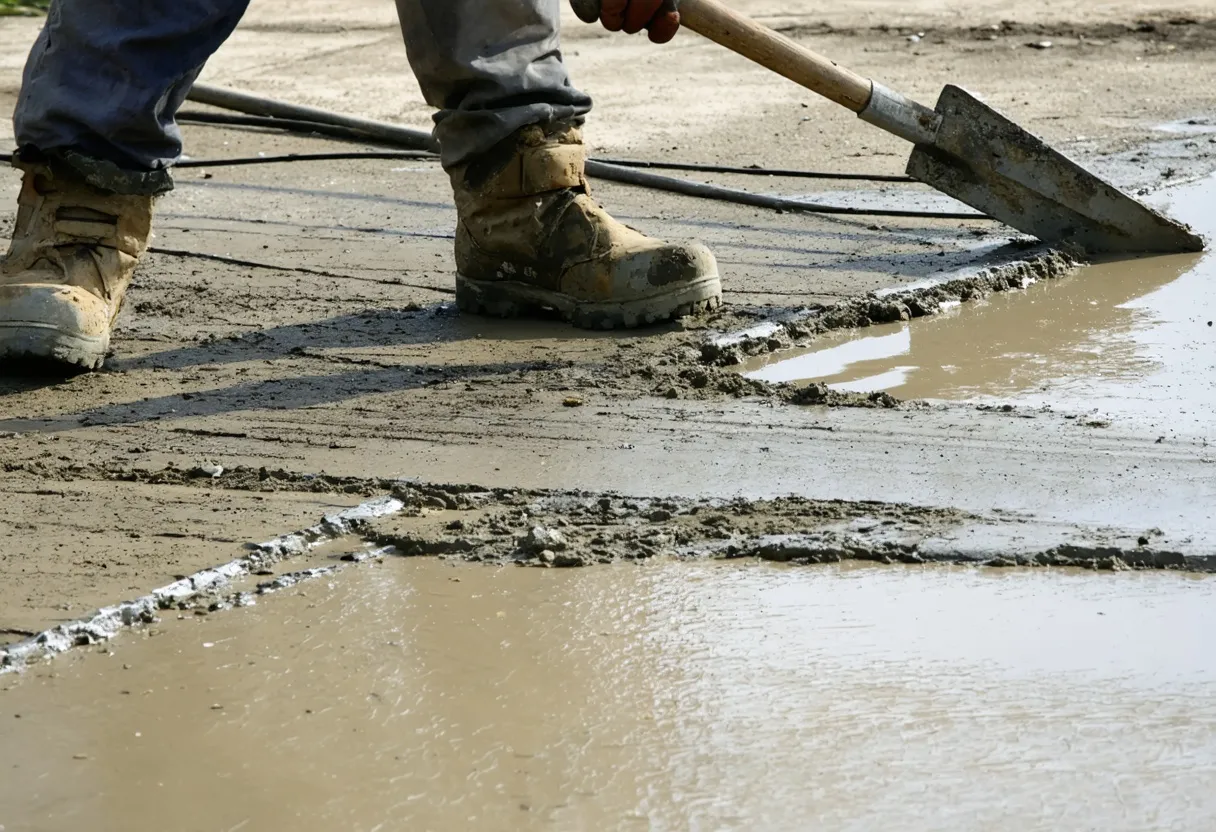
If you've got a cracked driveway, a crumbling porch slab, or a patio that's started to pit and flake after another wet Alabama summer, you're not dealing with a cosmetic problem — you're dealing with West Alabama's clay soil and rainfall doing exactly what they do to unprotected or aging concrete. Concrete repair in Tuscaloosa isn't the same job as concrete repair in a place with sandy, well-drained soil. Our clay expands when it's saturated and shrinks hard when it dries out, and with roughly 55 inches of rain falling on this area most years, that cycle repeats constantly under every slab in town. The result: cracked driveways, uneven walkways, spalled garage floors, and foundation slabs that settle unevenly.
This page walks through what real concrete repair involves in Tuscaloosa — how the process works, what actually drives cost, how our clay soil and climate cause the damage you're seeing, and how to tell a qualified local crew from a directory listing with a phone number and nothing behind it. If you need emergency concrete repair in Tuscaloosa or same-day concrete crack repair before a wedding, closing, or inspection, that's covered too.
What Concrete Repair Actually Covers
"Concrete repair" gets used as a catch-all term, but it covers a wide range of distinct problems, each with a different fix. A qualified crew should be able to diagnose which of these you're actually dealing with — not just patch the surface and hope it holds:
- Crack repair — routing and sealing active cracks, epoxy or polyurethane injection for structural cracks, and flexible sealant for surface cracks that move with temperature swings.
- Spalling repair — resurfacing or patching concrete where the top layer has flaked, popped, or chipped away, usually from freeze-thaw cycling, deicing salt, or poor original finishing.
- Scaling repair — addressing the peeling, flaking surface layer that shows up on driveways and patios exposed to repeated wet-dry and hot-cold cycles.
- Slab leveling and mudjacking — raising sunken sections of driveway, sidewalk, patio, or garage floor back to grade instead of tearing out and replacing the whole slab.
- Joint and expansion joint repair — replacing failed joint filler that's let water intrude under the slab.
- Resurfacing and overlays — applying a new wear layer over structurally sound but cosmetically rough concrete.
- Foundation-related slab repair — addressing cracks and settlement tied to foundation movement, which often needs a different approach than a driveway crack. If you're seeing stair-step cracks in a foundation wall or a slab that's pulling away from the house, that's a foundation issue first — see our Tuscaloosa foundation repair services for that side of it.
A good repair company tells you which category your damage falls into before quoting anything, because the fix — and the price — is completely different for a hairline surface crack versus a structural crack that's actively growing.
Why Tuscaloosa Concrete Cracks: Clay Soil and Rainfall
This is the part most out-of-town lead-gen sites skip entirely, and it's the most useful thing a homeowner here can understand. West Alabama sits on heavy clay soil, and clay behaves nothing like sand or loam under a slab. When it rains, clay absorbs water and swells. When it dries out — which happens fast during Tuscaloosa's hot summer stretches — it shrinks and pulls away from whatever's sitting on top of it. With around 55 inches of rain falling across the area in a typical year, that expansion-and-contraction cycle isn't a rare event — it's constant, and it's the single biggest driver of concrete crack causes in Alabama clay soil.
Here's what that cycle does to concrete over time:
- Uneven settling. Clay doesn't shrink evenly across a slab's footprint, so one corner or edge can drop while the rest stays put, creating the sunken sections and trip hazards common on Tuscaloosa driveways and walkways.
- Void formation underneath. As saturated clay dries and pulls back, it can leave gaps beneath the slab. Concrete has almost no tensile strength, so an unsupported section eventually cracks under its own weight or a parked vehicle's.
- Hydrostatic pressure during heavy rain. Saturated clay pushes against foundation walls and slab edges, which is why cracks often show up or worsen right after a heavy storm system moves through.
- Freeze-thaw and wet-dry surface stress. Even with Alabama's mild winters, the surface layer of concrete goes through enough moisture and temperature cycling to cause scaling and spalling, especially on slabs that weren't finished or cured properly to begin with.
None of this means concrete is a bad choice for this area — it means concrete here needs to be installed and repaired with clay soil behavior in mind, not treated like it's going into sandy ground. That's the difference between a repair that lasts and one that cracks again in eighteen months.
Concrete Repair Solutions: Matching the Fix to the Damage
Not every crack needs the same treatment, and using the wrong method is one of the most common reasons repairs fail early. Here's how the right solution is chosen:
Surface Cracks and Hairline Cracks
Thin, non-moving cracks that don't affect structural integrity typically get routed out and filled with a flexible polyurethane or silicone sealant. Flexibility matters here — a rigid filler will just crack again the first time the slab shifts with the clay underneath it.
Structural Cracks
Wider cracks, cracks with vertical offset (one side higher than the other), or cracks that keep growing usually call for epoxy or polyurethane injection, which bonds the two sides of the crack back together and restores load-bearing strength. This is common on garage floors and driveways carrying vehicle weight.
Spalling and Scaling
Spalling and scaling concrete repair typically starts with removing the damaged surface layer, then either resurfacing with a bonded overlay or, in more severe cases, replacing the top few inches of the slab. Trying to skim-coat over spalled concrete without addressing why it spalled — usually poor drainage or a weak original mix — just delays the problem.
Sunken or Settled Slabs
Rather than demolishing and repouring a sunken driveway or patio section, slab leveling (mudjacking or polyurethane foam lifting) raises the existing slab back to grade by filling the void underneath. It's faster, less disruptive, and considerably less expensive than full replacement when the concrete itself is still structurally sound.
Joint Failure and Water Intrusion
Failed or missing joint sealant lets water get underneath the slab, which accelerates the clay soil erosion problem described above. Resealing joints is one of the cheapest preventive repairs available and one of the most commonly skipped.
Emergency and Same-Day Concrete Repair in Tuscaloosa
Some concrete problems can't wait for a normal scheduling window — a cracked step that's become a fall hazard, a driveway slab that's heaved after a storm, a commercial entrance that needs to be safe and presentable by tomorrow morning. Emergency concrete repair in Tuscaloosa covers situations like:
- Trip-and-fall hazards on walkways, steps, or porches that need to be safe immediately
- Storm-related damage to driveways or slabs after heavy rain saturates and shifts the clay underneath
- Commercial properties needing a parking lot, loading area, or entrance repaired before customers or inspectors arrive
- Active cracks that are visibly widening and threatening to undermine a larger section of concrete
Same-day concrete crack repair is realistic for most crack injection and sealant work, since it doesn't require the same cure-and-set timeline as a full pour or resurfacing job. Larger repairs — slab leveling, spalling replacement, sizable structural cracks — still need to be assessed in person first, but same-day mobilization for the assessment itself is what separates a real local crew from a call center that books you two weeks out.
How the Repair Process Works
A concrete repair job should follow a clear sequence, not a guess-and-patch approach. Here's what to expect from a consultation through to a finished repair:
1. On-Site Assessment
A technician inspects the damage in person — measuring crack width, checking for vertical displacement, testing for voids underneath the slab, and looking at drainage around the area. This step also identifies whether the issue is isolated to the slab or connected to a foundation problem that needs separate attention.
2. Diagnosis and Root Cause
Before any fix is proposed, the cause gets identified: soil movement, poor original drainage, a weak or under-reinforced original pour, tree root intrusion, or normal wear from age and traffic. Repairing the symptom without addressing the cause is how cracks come back.
3. Written Scope and Pricing
You should get a clear, written explanation of what's being repaired, which method will be used, and why — not just a lump-sum number. This is also when timeline, warranty terms, and any prep work (demo, drainage correction, control joint additions) get spelled out.
4. Site Prep
Cracks get routed and cleaned, damaged material gets removed, and the surrounding area gets protected. For leveling jobs, injection ports get set; for resurfacing, the existing surface gets profiled so the new material bonds properly.
5. Repair Execution
The actual repair — injection, patching, leveling, resurfacing, or joint resealing — gets performed according to the scope. Weather matters here: concrete repair materials have temperature and moisture windows for proper curing, which is one more reason clay-soil rainfall patterns factor into scheduling in this region.
6. Cure Time and Final Inspection
Depending on the method, cure time ranges from a few hours (some injection resins) to several days (resurfacing overlays, new pours). A final walk-through confirms the repair matches the agreed scope before the job is closed out.
What Affects the Cost of Concrete Repair
Every property is different, so real pricing depends on a handful of specific factors rather than a flat rate. What actually moves the number:
- Type and severity of damage. A hairline crack sealed with polyurethane costs far less than a sunken slab that needs mudjacking or a spalled surface that needs full resurfacing.
- Square footage and linear footage. Crack repair is typically priced by linear foot; resurfacing and leveling are priced by square foot.
- Access and site conditions. Equipment access, slope, landscaping in the way, and how far materials have to be moved all affect labor time.
- Root cause remediation. If the fix requires correcting drainage or adding a French drain to stop clay-soil saturation from causing the same crack again, that's additional scope beyond the patch itself.
- Matching existing concrete. Blending new material with an existing slab's color, texture, and aggregate takes more skill and time than a straightforward patch, and affects both cost and how noticeable the repair is.
- Residential vs. commercial scope. Commercial jobs often involve larger areas, load ratings for vehicle or equipment traffic, and scheduling around business hours — all of which factor into cost differently than a driveway or patio.
- Emergency or expedited timelines. Same-day or rush scheduling for urgent hazards typically carries a different pricing structure than standard scheduled work.
Ask for an itemized quote broken down by these factors rather than a single number — it's the easiest way to compare estimates from different companies and to know exactly what you're paying for.
Service Area: Tuscaloosa and Surrounding West Alabama
Concrete behaves the same way — clay soil, heavy seasonal rainfall — across the broader Tuscaloosa metro, not just within city limits. We handle concrete repair throughout Tuscaloosa, including Forest Lake and Alberta City, and extend service into Northport, Cottondale, and Vance. If you're in one of these areas and dealing with a cracked driveway, settling patio, or spalled garage floor, the diagnosis and repair approach is the same clay-soil-aware process described above, adjusted for your specific property and drainage conditions.
Residential vs. Commercial Concrete Repair
These aren't the same job wearing different clothes — the requirements genuinely differ.
Residential Concrete Repair
Driveways, walkways, patios, garage floors, porches, and pool decks. Priorities here are usually curb appeal, safety (especially trip hazards on walkways and steps), and matching existing finishes so a repair doesn't stand out as an obvious patch. Scheduling flexibility around family routines matters, and most residential jobs can be completed in a day or two once work begins.
Commercial Concrete Repair
Parking lots, loading docks, warehouse floors, sidewalks, and entryways. Commercial repairs have to account for vehicle and foot traffic loads, ADA compliance on walkways and ramps, and minimizing disruption to business operations — which often means night or weekend scheduling. Documentation for insurance or liability purposes (photos, written scope, load ratings) is also more commonly required on the commercial side.
DIY vs. Professional Concrete Repair
Bagged concrete patch and crack filler from a hardware store can genuinely work for very minor cosmetic cracks — hairline surface cracks with no vertical movement, in an area with no drainage or structural concern. That's the honest ceiling for DIY.
Where DIY repairs commonly fail:
- Wrong material for the crack type. Rigid patch compound on a crack that's still moving with clay-soil cycling will crack again, often within a season.
- No root-cause diagnosis. Patching a symptom without addressing the void or drainage issue underneath means the same spot fails again, sometimes worse.
- Surface prep shortcuts. Proper crack repair requires routing to the right depth and width and cleaning out debris — skipping this is the single biggest reason store-bought fillers pop out within months.
- No warranty. A DIY repair that fails costs you the material, the labor, and then a professional repair on top of it. A professionally installed repair backed by a warranty means a callback costs you nothing.
For structural cracks, sunken slabs, spalling, or anything near a foundation, professional assessment isn't optional — it's the difference between a repair that lasts and a repeat expense.
Concrete Durability and Longevity
Properly installed and maintained concrete in this region can last decades, but "properly" is doing real work in that sentence. Longevity depends on:
- Original mix design and reinforcement — adequate rebar or wire mesh and a mix suited to clay-soil movement matters more here than in stable-soil regions.
- Drainage around the slab — concrete that sheds water away from its edges and base resists the saturation cycle that damages clay-supported slabs.
- Sealing — a quality sealer reapplied periodically protects against moisture intrusion, scaling, and surface wear.
- Joint maintenance — keeping expansion and control joints filled prevents water from reaching the sub-base.
- Prompt crack repair — small cracks sealed early stay small; ignored cracks let water into the sub-base and accelerate every problem described above.
Concrete that's maintained this way typically outlasts wood in comparable outdoor applications, which is worth understanding if you're deciding between materials for a patio.
Patio Maintenance: Concrete vs. Wood Deck
Homeowners weighing a new patio or comparing an existing concrete patio to a wood deck alternative should know the real maintenance trade-offs, not just the upfront cost comparison:
- Concrete patios need periodic sealing, occasional crack repair, and pressure washing to prevent staining. They don't rot, don't attract termites, and don't need refinishing or staining on a recurring cycle. In Tuscaloosa's rainfall and clay-soil conditions, the main maintenance item is staying ahead of cracks before water gets into the sub-base.
- Wood decks require regular staining or sealing (often annually in a humid climate like this one), are vulnerable to rot and termite damage, and have a shorter practical lifespan before boards need replacing. Alabama's humidity and rainfall totals work against wood more aggressively than they work against sealed concrete.
Neither material is maintenance-free, but concrete's maintenance is less frequent and generally less expensive over a 15-20 year window, provided small cracks and joint issues get addressed promptly instead of left to spread.
Request a Free Quote
No obligation, no pressure, just a clear price for your project.
Get Your Written Quote
See the price before you decide anything.